PERFECT AS A PICTURE
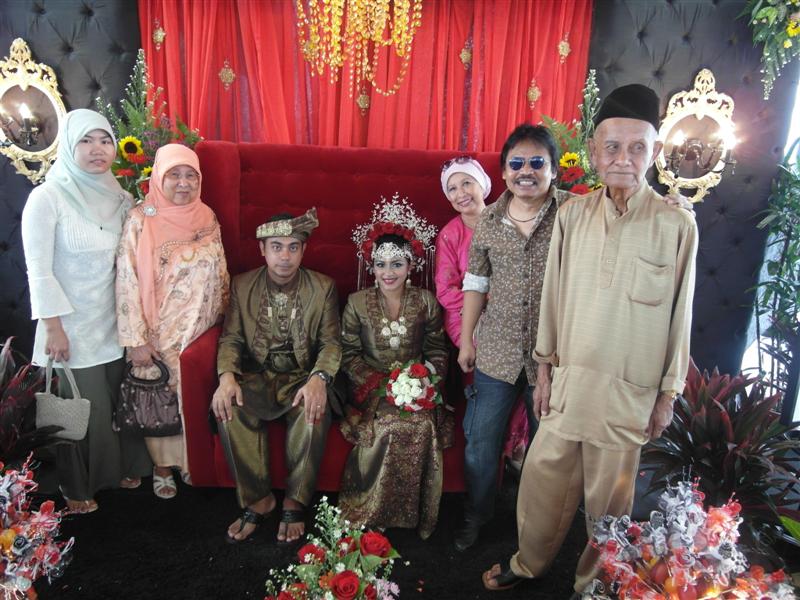
 My cousin and his lovely bride in a traditional Malay wedding costume
 From traditional to the modern wedding gown
 The multi-tiered wedding cake
 The cake as as preety as the real flower
My sisters and mum with the lovely couple  The exquisitely decked dias complete with chandeliers
 Three sisters in a row - Pasirisrella, Tampinesrella and Yishurella
 A multi-purpose hall is used for the wedding reception
 With my ex-student Arnilah who was a guest at the wedding

Dessert for the guests to nibble
 With my Aunt Yah

My uncle and his children
 Uncle Kadir Bin Haji Moonshi
 A happy moment with the wedded couple A PEEK IN THE PAST
Malay weddings are grand affairs which involve both the groom's and the bride's family. I truly mean the whole family. It's not just the immediate family members who would be busy, but almost all those in the family tree who are still alive would play a role, be it significant or not to be part of the celebration and in the planning. Work can begin a year ahead of the agreed wedding date so that all events of the wedding can be executed in a military-like precision drill on the actual nuptial date. That's the joy of being involved in a Malay wedding.
Times have changed and Malay weddings nowadays are celebrated differently, but still with lots of grandeur and finesse. The void decks or multipurpose halls where the wedding ceremony takes place, are decked with flowers, chandeliers and the concrete columns draped in different pastel hues, gold, silver and even black.The deco depicts the theme which the bride or groom have selected. Gothic, country, modern, romantic, resort, garden.....just name it and the wedding planners would fulfill your dream of the year. Just be ready to pull out thick wads of notes to pay your wedding planner after that. Family members are not totally busy as most of the major tasks have been taken over by the hired event planner.
When my uncles got married in the 1960s, all planning and preparation were carried out by immediate family members and close friends. No one has ever heard of a wedding planner during those times. The only important person in the bride's lips would only be the 'Mak Andam' (the beautician) and for the groom, it would definitely be the 'Tok Kathi' or the religious official who solemnises the marriage. Other than that, all detailed planning had to be undertaken by the parents, aunties, uncles and siblings of the couple. All details pertaining to the wedding are written in a book so that when the next child gets married, the reference needed has been recorded. The Tok Penghulu or the village head would also be consulted for his highly regarded views and opinions.
To host the wedding feast, a simple tent was erected at granny's kampung house. A flat ground around the compound area was chosen. It would be easier to place the wooden tables and chairs on the flat hard ground. The kampung youths would fell coconut fronds and securely tie these around the tent frame. A football kind of carnival atmosphere would fill the air because flags from all over the world would be hung along the tent structure. These colourful flags of bright leaf green, bloody red, sunflower yellow and Prussian blue would flap and flutter every time the wind blew, announcing to the guests that they had reached the right house for the wedding.
If the couple could afford, life band would be hired to add more gaiety to the occasion. A Ramlie and The Rhythm Boys (the heart throb of many Malay girls in the 60's) did perform at one of my uncle's wedding day. Another top choice band during that era would be The Siglap Five with Jefrydin as the hit singer. Nowadays, DJs manning the karaoke system has replaced most of these live performances. They earn good money. Even the guests are free to sing together with the hired singers.
The kompang is still featured in most weddings up till now. Occasionally tough-looking Harley riders clad in black with metal chains dangling from their jean pockets. ride along behind the groom's bridal car. Their presence add some pomp, novelty and needless to say help to increase the decibel measurement of the noise level when their leather covered hands revved up the throttle of those monster engines.
A “Joget Lambak” (free-all-traditional dancing) session would also be held on the eve of the wedding date, usually on the Saturday. It offered the ideal opportunity for guests to let their hair down by getting up on the stage and literally dance the night away. The kampung band, playing traditional instruments would provide the music. Dances play an integral part in a Malay culture as a creative and a community expression of its people.You would witness the strong gotong royong spirit being practised during the wedding. Everyone is chipping in to ensure on the success of the wedding. Neighbours and relatives would stream in to offer help of any kind to the couple's parents. And they didn't appear empty handed. Traditional kueh like baulu, lempeyek, epok-epok, putri salat and koleh-koleh would be given to the host to serve those who would also pop in.
The elderly would be involved in mass cooking for the hundreds or even thousands of the invited guests. The bride's or the groom's house would be a hive of activity a week before the actual wedding date. Nasi beryani is a must to be served with beef, chicken, dalcha, achar and pachri. Those days firewood would be used as fuel to cook the rice and the dishes. Guests would go home with the bunga telur too as a token of appreciation from the host. In return, they would present the host with 'wang sumbangan' or some cash. It was also quite common for the wedded couple to receive boxes of gifts, usually glassware and electrical appliances from their guests. These gifts would be placed beside the dias or pelamin as display items for the guests to see. Nowadays, couple receive department store shopping vouchers for them to purchase the items they need to start their home with.
The youth of the kampung would help to serve the guests as well as wash the dishes and the big blacken pots used in the cooking. Since youngsters hardly date during those times, such social functions like a Malay wedding would be one opportunity for them to get to know one other from the opposite sex. Names and address are exchanged for the next contact. No hand phone number or email addresses, mind you. If you want to keep in touch with the person you like, it's all done through the laborious means of letter writing. I wonder how many romances had bloomed and ended up in marriages when these youngsters met and helped out during such wedding feasts. Weddings are waited with bated breath by the youngsters for they might cross paths with their future life partner.
I still remember what the kampung folks did to keep the rain away on the wedding date. The chief chef would skewer a few pieces of shallots and red chilly through a satay stick. He would then poke the stick into the ground. Though many things associated with Malay wedding have changed and long gone, but this custom has not died out. I still see some wedding cooks practising this to keep away the clouds from bursting its moisture on the wedding day.